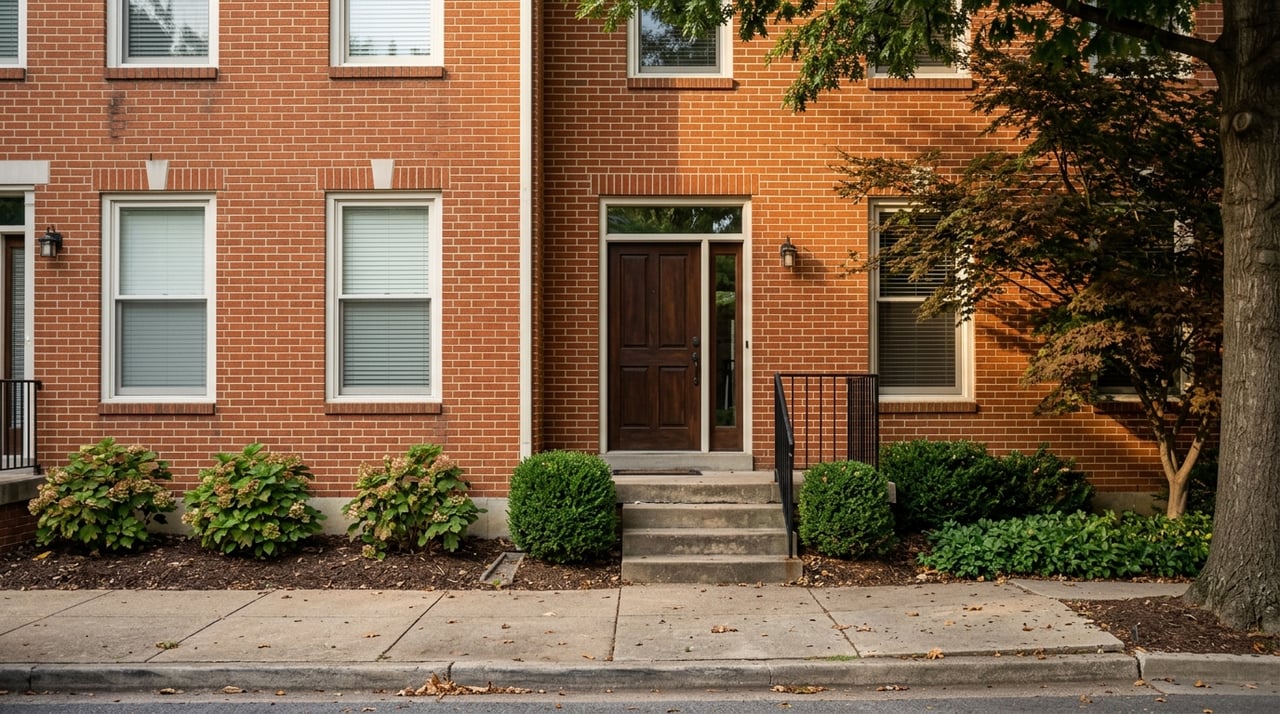
Buying your first townhome in Fairfax can feel like a balancing act. You want a home that fits your budget, shortens your commute, and does not surprise you with hidden costs after closing. The good news is that with the right local lens, you can compare options more clearly and make a confident decision. Let’s dive in.
Why Fairfax Townhomes Appeal to First-Time Buyers
If you are looking for a middle ground between a detached house and a condo, a townhome often fits that need. Fairfax County housing resources describe townhomes as a housing type that can blend more privacy than many condos with shared community rules, fees, and maintenance responsibilities.
That matters in a market where choices can feel tight. In the broader Fairfax County, City of Fairfax, and City of Falls Church area, there were 444,029 housing units in 2023, and attached single-family homes made up 23% of the housing stock. The countywide vacancy estimate was 3.9% in 2024 ACS data, which points to a relatively competitive environment for buyers.
For a first-time buyer, that means you need more than a pretty kitchen to judge value. In Fairfax, the smarter approach is to compare location, HOA structure, parking, commute options, and maintenance age before you focus on cosmetic finishes.
Know What a Townhome Really Includes
Not every Fairfax townhome lives the same way. County housing information notes that townhomes and condos vary in layout, and some local plans have included homes roughly 14 to 20 feet wide with different parking setups depending on width.
In practice, that can change your daily life more than you expect. A narrower unit may have a one-car garage with tandem parking, while a wider unit may offer side-by-side parking. If you have two drivers, frequent guests, or need storage space, that difference can be a major quality-of-life factor.
Before you fall in love with finishes, ask yourself a few practical questions:
- How many levels are you comfortable with?
- Do you want a garage, driveway, or both?
- Is parking easy for guests?
- Do you need basement space or extra storage?
- How much exterior maintenance will be your responsibility?
Those answers will help you filter listings faster and avoid touring homes that do not match how you actually live.
Understand HOA Rules Before You Commit
Many Fairfax townhomes are part of a common-interest community. In Virginia, that usually means an HOA, property owners association, or condo association with rules, fees, and shared responsibilities.
This is one of the biggest learning curves for first-time buyers. HOA dues may help cover certain community expenses, but the exact coverage varies. You need to know what you are paying for and whether additional costs may be coming.
What the Virginia Resale Certificate Can Show
Virginia uses a standardized resale certificate for homes in common-interest communities. This package can include governing documents, rules, assessments, fees, special assessments, reserve information, financial statements, operating budgets, reserve studies, board minutes, and notices about violations or code issues.
This is not just paperwork to skim at the last minute. It can reveal whether the community is financially stable, whether large repairs may be ahead, and whether there are restrictions that affect how you plan to use the home.
Key HOA Questions to Ask
When you review a Fairfax townhome, focus on the questions that usually matter most:
- What do the dues cover?
- Are there any special assessments now or planned?
- Is there a reserve study?
- Are major capital projects coming soon?
- Are rentals restricted?
- Is parking assigned, permit-based, or first come, first served?
- Is there a master association or layered fee structure?
These details can affect your monthly budget and your flexibility after move-in.
Why Timing Matters in Virginia
Virginia law requires the seller or seller’s agent to disclose that the property is in a common-interest community and to obtain and deliver the resale certificate. A buyer’s cancellation rights are tied to receiving that certificate and to the timing language in the contract.
For you, the takeaway is simple. Review HOA documents carefully and promptly, and make sure you understand the timeline built into your contract. This is one of the most important protection points in a Fairfax townhome purchase.
Compare Commute Options Like a Local
A townhome that looks great on paper can feel very different once you test the drive, transit access, and parking reality. In Fairfax, your commute is part of the home-buying decision, not an afterthought.
For transit-oriented buyers, several stations and systems shape the area:
- Vienna/Fairfax-GMU is the final Orange Line stop in Virginia and connects with I-66.
- Dunn Loring sits near I-66 and Gallows Road and is close to the Mosaic area.
- Franconia-Springfield connects commuters to VRE, Fairfax Connector, and Metrobus.
Within the City of Fairfax, the fare-free CUE bus connects neighborhoods, George Mason University, the Vienna/Fairfax-GMU station, Old Town, parks, schools, and other destinations. Fairfax Connector also serves major commuter routes, including GMU-Pentagon and Stringfellow Road-Vienna.
If you drive, also look beyond the map app. I-66 express lane tolling and HOV rules can affect your daily cost and travel time. In some areas, residential permit parking and community parking districts can also shape guest parking and overnight parking options.
A Better Touring Habit
When you visit a townhome, try to test the location at the times you would actually use it. A quick midday showing may not tell you much about morning traffic, evening parking, or weekend activity.
A smart first-time buyer looks at the full routine:
- Morning drive time
- Transit access and walkability to stops
- Evening parking availability
- Guest parking rules
- Route options during peak traffic
Pay Close Attention to Age and Maintenance
Fairfax has a mature housing stock, and that matters when you buy a townhome. County data show that most units in the area were built between 1960 and 1999, and 47% of owner-occupied units in the broader Fairfax region were built before 1980.
Older homes can offer strong locations and established communities, but they also deserve a closer look. Systems age. Materials wear out. Shared walls, shared rooflines, and below-grade areas can make certain maintenance issues more important in a townhome than they first appear.
Inspection Areas That Deserve Extra Attention
Inspection guidance highlights several areas buyers should evaluate carefully:
- Roof
- Foundation and crawlspace
- Wall structure
- Electrical systems
- Plumbing
- HVAC
- Grading and drainage
- Windows
- Basements
Depending on the home, you may also need specialist checks for pests, radon, asbestos, mold, or lead.
Moisture and Drainage Matter More Than You Think
Moisture problems can be expensive and easy to miss during a short showing. Guidance on moisture control points to site drainage, foundations, walls, roof and ceiling assemblies, plumbing, and HVAC as key areas to watch.
That is especially relevant in townhomes with basements, below-grade entries, or shared roofs and walls. Even if the interior looks freshly updated, you still want clear answers about any prior water intrusion, drainage issues, or roof leaks.
Know the Lead Disclosure Rule for Older Homes
If a Fairfax townhome was built before 1978, there is an extra layer of due diligence. Federal law requires lead disclosures and an EPA pamphlet for most homes built before 1978, and buyers generally receive a 10-day opportunity to inspect for lead unless the parties agree to change that period.
You do not need to panic about older housing, but you do need to stay informed. If the home falls into that age range, make sure the required disclosures are provided and ask questions early so you understand your options.
Use a Simple Touring Checklist
The easiest way to stay focused during showings is to use the same checklist every time. That keeps you from overvaluing finishes and undervaluing the things that affect ownership costs.
Here are some of the most useful questions to ask when touring a Fairfax townhome:
- Has there been any water intrusion or roof leakage?
- Has there been any foundation movement or drainage trouble?
- How old are the HVAC, roof, water heater, and major systems?
- Is any HOA exterior work planned?
- Are there special assessments now or under discussion?
- How does parking work for owners and guests?
- If built before 1978, are the required lead disclosures available?
If possible, keep notes right after each tour. First-time buyers often see several homes in a short period, and details can blur quickly.
Verify Schools by Address
If school assignments are part of your planning, verify them by exact address. Fairfax County Public Schools provides a Boundary Locator because assignments are address-specific and boundary reviews can change assignments over time.
The best approach is to confirm this early for any home you are seriously considering. That helps you avoid assumptions based on a neighborhood name or a listing remark.
Focus on Fit, Not Just Finishes
The best first townhome is not always the one with the newest backsplash or trendiest lighting. It is the one that fits your budget, your commute, your parking needs, and the level of maintenance and HOA structure you are comfortable managing.
In Fairfax, that local context matters. A well-chosen townhome can give you a practical entry into homeownership, but only if you evaluate the full picture with care. When you compare homes through that lens, you can move forward with more clarity and fewer surprises.
If you want a local, step-by-step strategy for comparing Fairfax townhomes, Dave Moya can help you sort through layouts, HOA details, and neighborhood tradeoffs with the kind of guidance that makes a first purchase feel a lot more manageable.
FAQs
What should first-time buyers check in a Fairfax townhome HOA?
- Review what the dues cover, whether there are special assessments, whether a reserve study exists, whether major projects are planned, how parking works, whether rentals are restricted, and whether there are layered association fees.
How do Fairfax townhome parking setups vary?
- Parking can vary by home and community. Some townhomes may have one-car garages with tandem parking, while others may offer side-by-side parking or permit-based community parking.
Why is the Virginia resale certificate important for a Fairfax townhome?
- The resale certificate can include rules, fees, assessments, reserve information, budgets, financial statements, board minutes, and notices about violations or code issues, which helps you evaluate the community before closing.
What inspection issues matter most in older Fairfax townhomes?
- Pay close attention to the roof, foundation, crawlspace, walls, electrical, plumbing, HVAC, drainage, windows, and basements, along with possible moisture, mold, radon, pest, asbestos, or lead concerns when relevant.
How can buyers verify school assignments for a Fairfax address?
- Use the FCPS Boundary Locator and check the exact property address, because school assignments are address-specific and can change over time.