Buying your first home in Washington, DC can feel overwhelming fast. One neighborhood might offer a condo near Metro, another might give you a rowhouse with more interior space, and another might lean toward detached homes with a quieter residential feel. If you are trying to figure out where you actually fit, the key is to stop thinking about neighborhood names alone and start thinking about how you want to live day to day. Let’s dive in.
Start with property type
In DC, your first neighborhood choice is often really a housing-type choice. According to the DC Office of Planning, about 40% of homes in the city are in large apartment buildings with 20 or more units, nearly 27% are in smaller apartment buildings, about 23% are duplexes, and only 11% are single-family detached homes.
That matters because your budget, maintenance level, and space needs usually line up with a certain kind of home. The Census reports a 41.5% owner-occupied housing rate in DC, a median owner-occupied home value of $737,100, and a median gross rent of $1,954. For many first-time buyers, that means being clear about what you want to own before narrowing your search to a specific part of the city.
Condo-heavy areas
If you want lower-maintenance living, condo and apartment-heavy areas may be a better fit. Wards 1, 2, and 6 each have more than 50% of homes in large apartment buildings, which means these parts of DC tend to offer more multifamily options.
Ward 2 includes areas such as Downtown, Georgetown, Foggy Bottom, West End, Dupont Circle, Logan Circle, Mount Vernon Square, and Shaw. The Office of Planning describes this ward as a mix of historic townhouses, apartments, office buildings, and newer multifamily development.
Ward 6 also includes a wide range of housing within mixed-use neighborhoods such as Downtown, Penn Quarter, Gallery Place, Chinatown, Southwest Waterfront, the Wharf, Capitol Riverfront, Capitol Hill, and Buzzard Point. If you want an urban setting with access to newer residential growth, this part of the city may deserve a close look.
Rowhouse-oriented areas
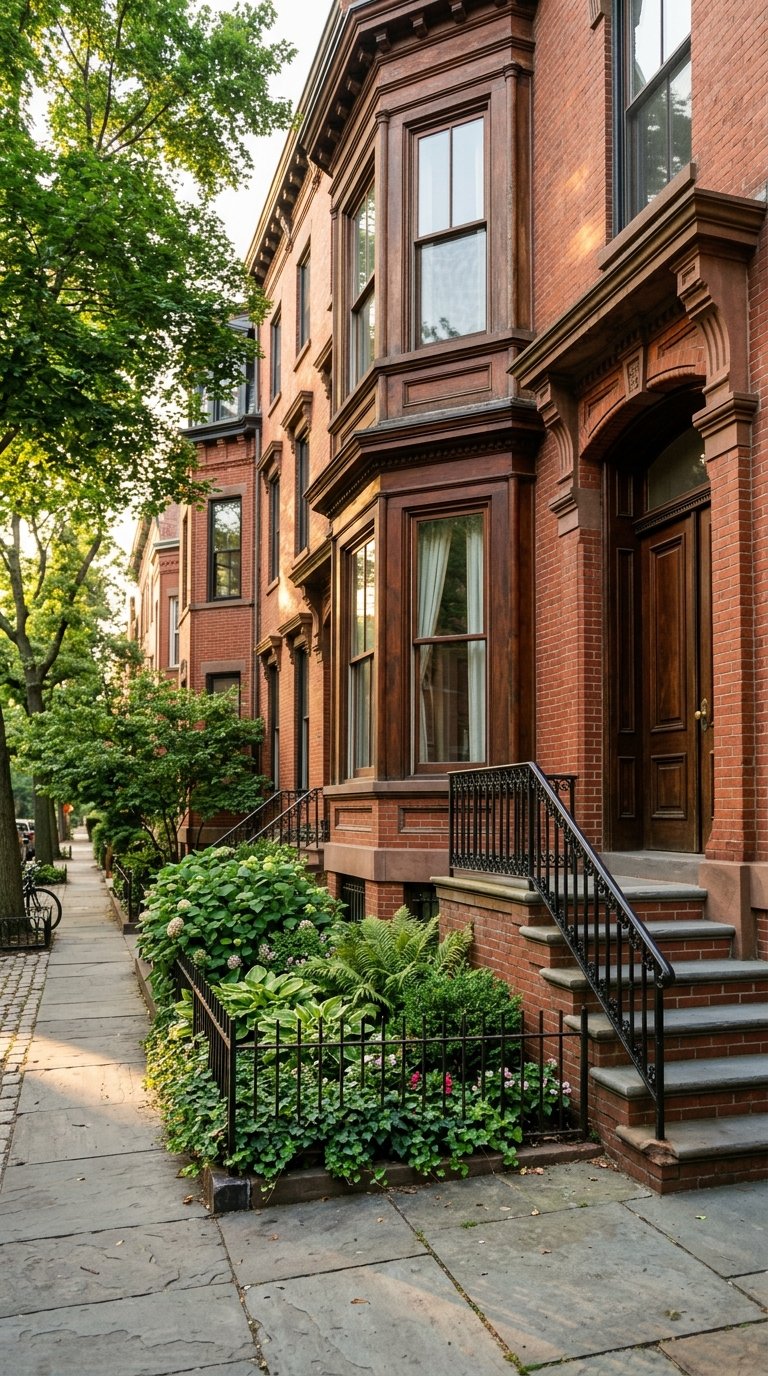
If you want more interior space and classic DC character, rowhouse areas may give you the best middle ground. Wards 4, 5, 7, and 8 lean more toward rowhouses and smaller apartment buildings, and Ward 1 still includes rowhouse-heavy neighborhoods such as Columbia Heights, Adams Morgan, Mount Pleasant, LeDroit Park, and Shaw.
Ward 5 is especially varied. The Office of Planning notes that Brookland, Eckington, Bloomingdale, Trinidad, Carver-Langston, Ivy City, Union Market, and parts of NoMA include a mix of Victorian homes, bungalows, townhouses, industrial land, and newer mixed-use development.
Detached-home areas
If your top priority is a detached home, focus on the wards where detached homes are more common. The Office of Planning says detached homes are most common in Wards 3, 4, and 5.
Ward 3 includes neighborhoods organized around village-style commercial centers, with dense apartments and townhouses near the center and more single-family homes farther out. Ward 4 also has a strong single-family and streetcar-suburb pattern, with neighborhoods such as Brightwood, Fort Totten, Takoma, 16th Street Heights, Shepherd Park, Barnaby Woods, Hawthorne, and parts of Chevy Chase.
Let your commute shape the real budget
A first home is not just about the mortgage. In DC, how you get around can change what homeownership really costs you each month.
WMATA says Metrorail has six color-coded lines and 98 stations across DC, Maryland, and Virginia, and you can travel between any two stations with no more than one transfer. That makes rail access a major factor when comparing neighborhoods, especially if you want to keep commuting simple.
The Census reports that DC’s mean one-way travel time to work is 30.0 minutes. The Office of Planning’s Housing + Transportation study found that annual household transportation costs across the region ranged from $8,500 to $25,000, with lower costs possible when residents can live without owning a car.
Car-light neighborhoods
If you want to rely less on a car, rail access, bus access, and bike options should move up your priority list. DDOT’s bicycle map includes bike lanes, bike routes, trails, cycle tracks, and Capital Bikeshare stations, and Capital Bikeshare now has more than 700 stations across the region.
In practical terms, neighborhoods near Metrorail stations and mixed-use corridors may help you reduce transportation costs. That does not automatically make them the best choice for everyone, but it can make a real difference in your monthly budget.
Space versus transit density
Some buyers want a home that supports a car-light routine. Others are willing to trade transit density for more space, a yard, or a more residential setting.
That tradeoff shows up clearly across DC. Central, rail-adjacent neighborhoods often offer easier access to jobs, stores, and entertainment, while lower-density areas may offer a different pace and more room. The right answer depends on how you actually spend your weekdays, not just what sounds good on a tour.
Define amenities by daily life
It is easy to fall for a neighborhood based on one fun Saturday afternoon. For a first home, it is smarter to think about the places and services you will use on an average Tuesday.
The Office of Planning uses the idea of a complete community, meaning a place that balances housing with access to everyday amenities, services, and destinations such as jobs, stores, and parks. That is a useful lens for first-time buyers because it keeps your search grounded in daily convenience.
Amenity-dense neighborhoods
Ward 2 is one of the clearest examples of amenity density. The Office of Planning says it contains the central business district and the city’s highest concentration of office jobs, along with Downtown retail, restaurants, entertainment venues, and museums.
Neighborhoods such as Georgetown, Foggy Bottom, Dupont Circle, Logan Circle, Mount Vernon Square, and Shaw add established shopping and dining or newer mixed-use activity. If your ideal lifestyle includes having a lot within easy reach, these areas may feel especially convenient.
Ward 1 also offers a strong mix of housing and commercial activity. Columbia Heights has a major commercial core, Adams Morgan is known for shops, restaurants, and bars, and Mount Pleasant offers leafy streets near the zoo and Rock Creek Park.
Residential and park-oriented neighborhoods
If parks, greenery, and a more residential feel matter most, other wards may line up better. Ward 4 leans more residential and park-oriented, while Ward 7 is defined by leafy streets, single-family homes, transit stations, and major parks such as Fort Dupont Park and the Anacostia River Park.
Ward 8 includes large parks such as Anacostia Park and Oxon Run Park, along with older residential areas in Anacostia and more suburban-feeling pockets farther south. These areas can appeal to buyers who want outdoor space and a different rhythm than the central core.
Watch for areas that are still evolving
Some DC neighborhoods are fairly established in how they feel and function. Others are still changing, and that can affect your experience over the next several years.
The Office of Planning points to ongoing change in several parts of the city. In Ward 5, the New York Avenue NE Vision Framework is guiding a shift from an industrial hub to a mixed-use community. Ward 7 has FY26 implementation work tied to place-based plans, and Ward 3 has development guidelines meant to support compatible mixed-use growth in historic corridors.
That does not mean change is good or bad on its own. It means you should ask whether you want a neighborhood that feels more established today or one that may look different as new housing, retail, and public improvements take shape.
A simple framework for first-time buyers
If you are feeling stuck, keep your search process simple. In DC, the best neighborhood is usually the one that matches your housing type, commute, and everyday needs.
Here is a practical framework to use:
- Pick the property type first. Decide whether you want a condo, rowhouse, or detached home.
- Test the commute mode second. Think about Metro, bus, biking, walking, and whether you want to own a car.
- Rank everyday amenities third. Focus on parks, stores, restaurants, and services you will use often.
- Check neighborhood change fourth. Look at whether the area feels stable or is still evolving.
This approach can help you cut through the noise. Instead of chasing the most talked-about neighborhood, you can focus on the place that best supports your budget and your routine.
What this means for your DC home search
Choosing a Washington, DC neighborhood for your first home is not about finding one “best” area. It is about finding the right match between the kind of home you want, the way you plan to commute, and the amenities that matter most in your daily life.
That is where local guidance can make a big difference. When you understand how property types, transit access, and neighborhood patterns vary across the city, you can make a more confident decision and avoid wasting time on areas that do not really fit your goals.
If you want help narrowing down your options in DC, Dave Moya can help you compare neighborhoods, housing types, and lifestyle tradeoffs so you can make your first move with clarity.
FAQs
What is the best Washington, DC neighborhood for a first-time homebuyer?
- The best DC neighborhood for a first-time buyer depends on your preferred property type, commute needs, and everyday lifestyle priorities.
Are condos more common than single-family homes in Washington, DC?
- Yes. The DC Office of Planning reports that large and small apartment buildings make up most of the city’s housing stock, while only about 11% of homes are single-family detached.
Which Washington, DC wards have more detached homes?
- Detached homes are most common in Wards 3, 4, and 5, according to the DC Office of Planning.
Which Washington, DC neighborhoods may work for a car-light lifestyle?
- Rail-adjacent and mixed-use neighborhoods may work well for a car-light lifestyle, especially in areas with strong Metro, bus, biking, and bikeshare access.
Why does commute matter when choosing a first home in Washington, DC?
- Commute matters because transportation costs can meaningfully affect your real monthly budget, and the Office of Planning found regional annual household transportation costs ranging from $8,500 to $25,000.
How can I compare Washington, DC neighborhoods more clearly?
- A simple way to compare DC neighborhoods is to start with property type, then review commute options, rank everyday amenities, and finally consider whether the area is stable or still evolving.