If you want to live in DC without relying on a car, NW and SW can give you real options. The key is not just picking a popular neighborhood, but choosing a block that keeps transit, daily errands, and housing style aligned with how you actually want to live. In this guide, you’ll see which NW and SW DC areas stand out for car-free living, what kinds of homes you’ll find there, and what tradeoffs to weigh before you move. Let’s dive in.
Why car-free living works in DC
Washington, DC is one of the more practical cities in the country for a no-car lifestyle, especially in its core neighborhoods. According to WMATA rail system information, Metrorail serves 98 stations across six color-coded lines, and the system generally connects any two stations with no more than one transfer.
Transit is only part of the picture. DDOT bike resources cited in the research show the city’s bicycle lane network has grown past 100 miles, including 24 miles of protected bike lanes by the end of 2021, while Capital Bikeshare has 8,000 bikes and more than 800 stations across the region. In dense parts of NW and SW, that mix of rail, buses, biking, and walking can make everyday life feel much simpler.
Another useful clue is station design. In many of the strongest car-free neighborhoods, nearby stations list no daily parking and instead emphasize bikeshare, bike racks, lockers, and pedestrian access, as shown on WMATA station pages. That setup reflects neighborhoods built more around moving people than storing cars.
What makes a neighborhood car-free friendly
Not every area with a Metro stop delivers the same experience. The best car-free pockets tend to combine a few things at once: dense housing, retail corridors, limited parking, and easy access to walking, biking, and rail.
That is why the experience can feel very block-specific. A home near a station entrance or active commercial corridor may feel highly convenient, while a place just a few blocks away can be less seamless for errands and commuting. When you are comparing homes, the map matters as much as the neighborhood name.
Dupont, West End, and Foggy Bottom
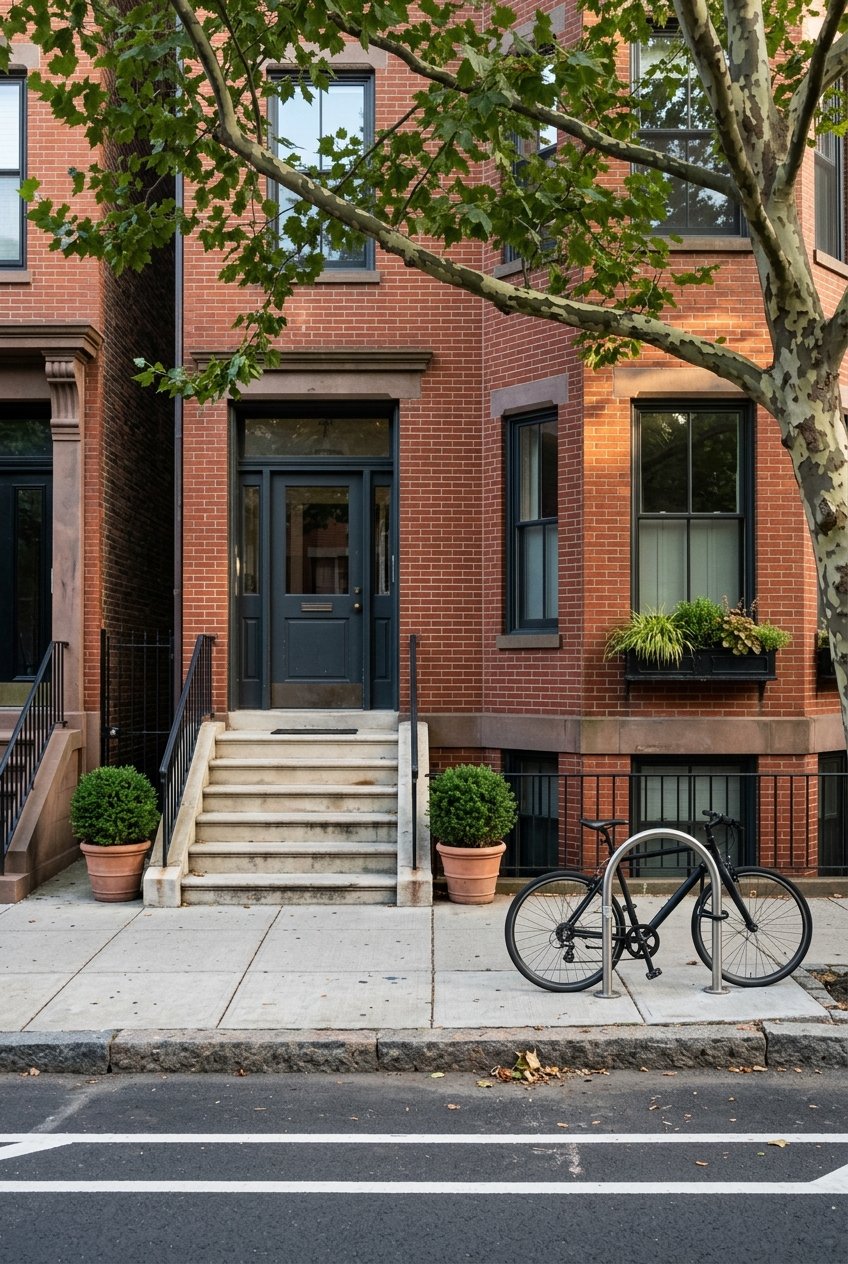
For buyers who want classic DC architecture with strong transit access, this is one of the most compelling areas to consider. Ward 2 planning information describes Foggy Bottom and the West End as a mix of historic townhouses, apartment buildings, and office buildings, while Dupont Circle is known for Victorian townhomes and larger historic residences.
The housing mix supports several kinds of car-free lifestyles. You’ll find rowhouses on side streets, larger apartment buildings, and older homes that were later converted into apartments and rooming houses. That variety can appeal if you want older housing character and the ability to stay close to transit.
Transit access is a major strength here. Dupont Circle station is on the Red Line and lists no parking, plus 26 bike racks. Foggy Bottom-GWU offers Blue, Orange, and Silver line access, no parking, bike racks, lockers, and bikesharing, which gives you more flexibility if your routine takes you across different parts of the city.
Best fit in this area
This pocket often works well if you want:
- Historic rowhouses or townhouse-style streetscapes
- Apartment living near established transit
- Strong rail access without depending on a car
- A more classic, older-housing feel
Main tradeoff to consider
Housing character is a major draw, but convenience can vary by exact block. Some addresses feel tightly connected to Metro and daily needs, while others are quieter and less immediate for errands on foot.
Logan Circle, U Street, and Shaw
If you want the strongest all-around setup for car-free living, this area stands out. Based on the planning documents in the research, Logan Circle, U Street, and Shaw combine multiple retail corridors, dense everyday services, bikeshare access, and two well-placed Metrorail stations.
The Logan Circle planning document describes Logan Circle as predominantly residential with three main retail corridors: 14th Street, U Street, and 9th Street. It also notes that the 14th/U corridor functions as a retail and arts district with a more walkable public realm. That matters because car-free living gets easier when groceries, restaurants, services, and transit all sit within the same daily pattern.
Ward 2 planning information also notes renovated houses and new multi-family and commercial development in Logan Circle, Mount Vernon Square, and Shaw, especially along the 14th Street corridor. For home shoppers, that usually means a broader menu of housing styles than you might find in a more uniform neighborhood.
Transit access is strong here as well. U Street station serves the Green and Yellow lines and includes bikesharing and bike racks, while Shaw-Howard U also serves the Green and Yellow lines, has bikesharing, and lists no parking. With both stations in the area, many blocks benefit from practical backup options.
Housing options in Logan Circle and Shaw
This area tends to suit buyers looking for:
- Renovated houses
- Newer multi-family buildings
- Homes near active retail corridors
- A dense, everyday-services environment
Why this pocket is so practical
For many people, this is the easiest no-car setup because so many pieces overlap. You are not choosing between transit access and neighborhood activity. In the best parts of this area, you can have both.
Southwest Waterfront and The Wharf
If your priority is newer construction and mixed-use living, Southwest can be a very strong option. Ward 6 planning information describes Southwest Waterfront as a place with modern high-rises and townhouses, and identifies The Wharf as a mixed-use neighborhood in Southwest.
The District’s Wharf overview describes it as a mile-long waterfront neighborhood within walking distance of major commerce and close to the White House, Capitol, and Smithsonian museums. For buyers who want newer buildings with ground-floor retail and a walkable setup, that is a meaningful advantage.
This area also offers unusually broad transit coverage. Waterfront station has no parking, bikesharing, and pedestrian access to the Potomac River waterfront and theater. L'Enfant Plaza adds Blue, Orange, Silver, Yellow, and Green line service plus VRE access, while Federal Center SW brings Blue, Orange, and Silver lines near museums and government buildings.
Housing options in Southwest
Southwest and nearby Buzzard Point offer a wider range of housing than some buyers expect. The research points to:
- Modern mixed-use residential buildings
- Townhouses
- Co-ops
- Larger apartment buildings
- Rowhouses in some existing blocks
The Wharf/Southwest waterfront information also highlights The Westerly, which added 449 homes including 136 affordable homes, along with neighborhood-serving retail. That is a good example of the newer live-near-everything model that attracts many car-free buyers.
Best fit in this area
Southwest often works best if you want:
- Newer residential buildings
- Ground-floor amenities nearby
- Access to several transit lines
- A waterfront setting with mixed-use development
Comparing NW and SW options
Choosing the right area depends on how you define convenience. Some buyers care most about classic architecture and a traditional DC feel. Others want the easiest day-to-day setup, while some prefer newer buildings and amenity-driven living.
| Area | Best known for | Common housing types | Transit edge |
|---|---|---|---|
| Dupont / West End / Foggy Bottom | Historic character and strong station access | Victorian townhomes, rowhouses, apartment buildings, conversions | Red Line plus Blue, Orange, Silver nearby |
| Logan Circle / U Street / Shaw | Strongest all-around car-free setup | Renovated houses, new multi-family buildings | Green and Yellow line access with multiple retail corridors |
| Southwest Waterfront / The Wharf | Newer mixed-use waterfront living | High-rises, townhouses, co-ops, apartments | Waterfront, L'Enfant Plaza, and Federal Center SW access |
How to choose the right block
When you tour homes, think beyond the listing photos and ask how the location will work on an ordinary Tuesday. A beautiful home in a generally walkable neighborhood can still feel inconvenient if the nearest station, bikeshare dock, or daily retail is farther than you expected.
It helps to focus on a few practical questions:
- How close is the nearest Metro entrance?
- Is there bikeshare nearby?
- Do nearby station pages show parking or a more pedestrian-focused setup?
- Are daily errands likely to happen on foot?
- Does the housing type match your lifestyle, whether that means a rowhouse, condo, co-op, or newer mixed-use building?
The best no-car fit is usually the one that supports your routine without constant workarounds. In DC, that often comes down to block-by-block convenience more than broad reputation alone.
A smart way to search car-free homes
If you are planning a move in DC, it helps to search with lifestyle filters, not just price and bedroom count. You can narrow your options faster by focusing on homes near stations like Dupont Circle, Foggy Bottom-GWU, U Street, Shaw-Howard U, Waterfront, L'Enfant Plaza, and Federal Center SW, then comparing the immediate blocks around them.
That kind of neighborhood-level strategy can save time and lead to a better long-term fit. If you want help comparing condo, townhouse, co-op, or rowhouse options in NW or SW DC, connect with Dave Moya for thoughtful, hyperlocal guidance tailored to how you want to live.
FAQs
What are the best NW DC neighborhoods for car-free living?
- In this article’s NW focus, Logan Circle, U Street, Shaw, Dupont Circle, West End, and Foggy Bottom stand out because they combine Metrorail access, bikeshare availability, and walkable retail corridors.
What housing types are common in car-free parts of NW DC?
- In NW DC, you’ll commonly find historic townhouses, rowhouses, apartment conversions, renovated houses, and newer multi-family buildings, depending on the neighborhood.
Is Southwest DC a good place for car-free living?
- Yes. Southwest Waterfront, The Wharf, Federal Center SW, and L'Enfant Plaza are strong options because they offer multi-line transit access, mixed-use development, and housing types that support walkable daily routines.
What is the biggest tradeoff in car-free living in DC neighborhoods?
- The biggest tradeoff is that convenience is highly block-specific, so two homes in the same neighborhood can feel very different depending on proximity to stations, retail corridors, and bikeshare access.
Which DC area is best for newer buildings without a car?
- Southwest Waterfront and The Wharf are among the strongest choices if you want newer mixed-use residential buildings, nearby retail, and strong transit connections.
Which DC area is best for historic homes and transit access?
- Dupont Circle, West End, and Foggy Bottom are strong options if you want older housing character paired with excellent rail access and a pedestrian-oriented setup.