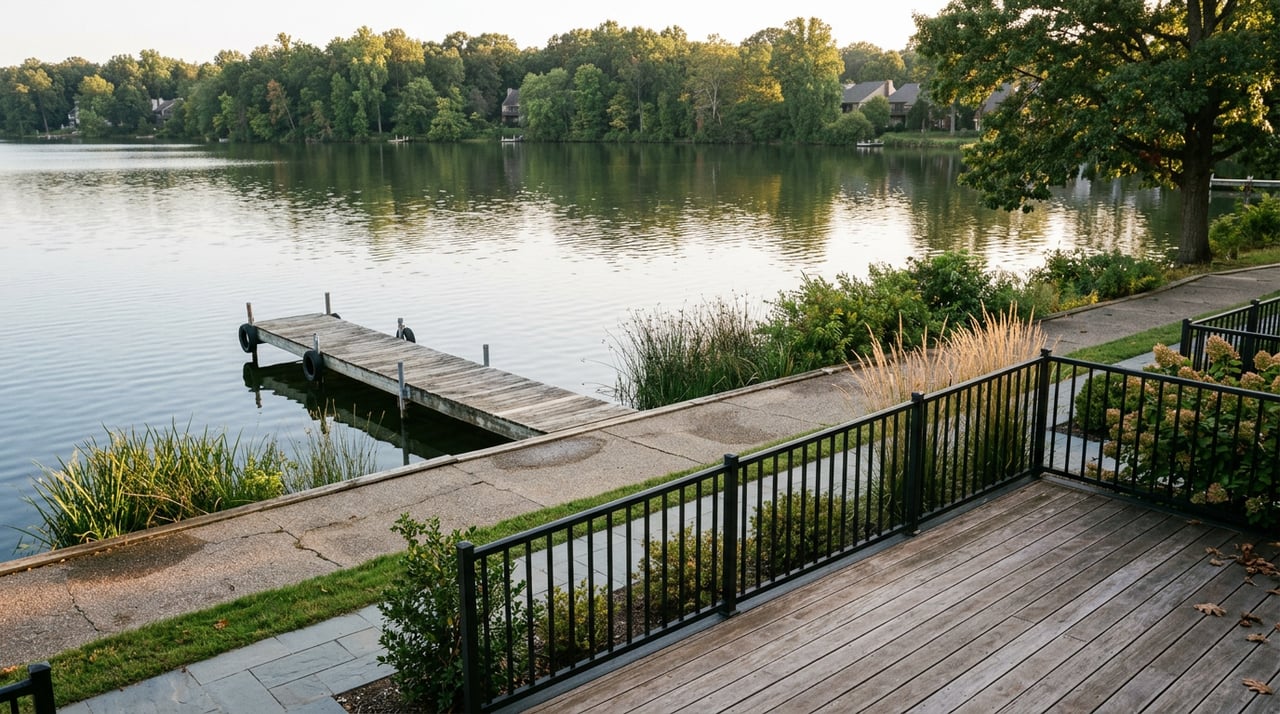
Imagine paddling from your own backyard at sunset, herons gliding overhead and the water calm under your board. If you are drawn to that Reston vibe, you also want clear answers about costs, rules, and what actually transfers when you buy on the lake. This guide gives you a practical, no‑nonsense look at the benefits and tradeoffs of living on or near Reston’s four lakes, with the key numbers, permits, and a step‑by‑step checklist to make a confident decision. Let’s dive in.
What “Reston lakefront” really means
Reston’s four primary lakes — Lake Anne, Lake Thoreau, Lake Audubon, and Lake Newport — are owned and managed by the Reston Association (RA). RA governs lake access, boating rules, shoreline standards, and many community amenities. You can review permitted activities and membership access on RA’s boating and lakes page.
RA’s authority comes from the Reston Deed, which also underpins covenants and design standards across the community. Cluster and condo associations that own shoreline set policies consistent with RA rules. You can read more background on the Reston Association Deed.
Every Reston property owner pays an annual RA assessment, which funds lakes, pools, trails, and watershed programs. For 2026, the RA assessment is $890 for most owners, with a reduced rate for those who qualify for Fairfax County tax relief. See details on RA’s assessment page.
The lifestyle upside
Living on the water adds daily value that you feel the moment you step outside.
- Direct access to paddling, catch‑and‑release fishing, and wildlife viewing.
- Private docks and waterside decks that turn evenings into a front‑row show for sunsets.
- Community programs that make it easy to try new activities. RA offers rentals and instructional programs for paddlecraft at Lake Anne and other access points. Explore current offerings on the RA boating page.
If your dream day involves a quiet morning paddle and coffee on the dock, lakefront living checks those boxes.
Rules that shape daily life
Lake living in Reston is peaceful and close‑knit, and it also comes with clear rules that protect water quality and neighbor enjoyment. Understanding them up front helps you avoid surprises.
Boats and permits
RA recognizes two main access types for boats:
- Permanent Mooring Permit. For one pontoon or deck boat that stays moored behind a lakefront property year‑round. These permits are fee‑based and require annual inspection. Only owners, not renters, may register a permanently moored boat.
- General Lake Access Permit. Free for RA members and required for hand‑carried boats like kayaks, canoes, and SUPs. These are typically seasonal and boats must be removed when not in use.
Shoreline controlled by a condo or cluster often requires association approval before RA will authorize a permanent mooring. Full details are in RA’s Boat Guide.
Size, power, and wake limits
To keep the lakes safe and quiet, RA enforces technical limits that affect what you can keep and operate:
- For new permits, the maximum boat size is 18 feet long by 10 feet wide, or 180 square feet.
- Only one permanently moored boat may be assigned per lakefront property.
- Gas motors are not allowed. Electric motors are permitted within RA thrust and power limits.
- All lakes are no‑wake zones.
Inspections confirm size and condition. Some oversized boats are grandfathered but may not convey at sale. See the specifics in the Boat Guide.
Swimming and water quality
Recreational swimming is not permitted in RA lakes. These lakes function as stormwater basins that receive runoff, so water quality and safety standards restrict open‑water swimming except for limited, controlled events. You can confirm permitted activities on the RA boating page.
Docks and approvals
Docks are a signature feature of lakefront living, yet they involve layered approvals. Before you plan a new dock or a major change, factor in:
- RA Design Review Board (DRB) guidelines and approvals.
- Fairfax County permitting and shoreline/environmental rules within the Chesapeake Bay watershed.
- RA license agreements for structures in or over RA‑owned water and shoreline.
Some docks convey with a property. Others exist under a license or are owned by a cluster or condo association. Always verify whether a dock is deeded to the lot, covered by an RA license, or controlled by the association. Ask for DRB approvals, county permits, and any license documents. The RA Boat Guide outlines the process and expectations.
What it costs to own on the lake
Purchase price patterns
Recent MLS examples show direct waterfront homes in Reston commonly sell at a premium to the broader Reston market. Lakefront single‑family homes and high‑end townhomes often close in the high six‑figure to low seven‑figure range. For context, recent reports place the overall Reston median around $485,000 as of early 2026. The exact premium depends on frontage length, private dock conveyance, property type, location on the lake, and the level of renovations. Your agent should pull lake‑specific comps on the same shoreline for a precise estimate.
Ongoing annual costs
Build these line items into your annual budget:
- RA assessment: $890 in 2026 for most owners. See the assessment page for details and tax‑relief information.
- HOA/cluster/condo dues: Many lake‑adjacent homes are part of a cluster or condo. Dues vary widely by community and amenities. Review the resale package for current rates and reserves.
- Boat permits and storage: RA charges an annual fee for permanent moorings. Hand‑carried boats require a free General Lake Access Permit, and RA offers kayak/canoe rack storage for modest seasonal fees. Check current programs on the RA boating page.
- Insurance and possible flood coverage: Standard homeowners insurance does not include flood. If your property sits in a regulated flood zone or has risk based on drainage, a lender may require flood insurance. Start with FEMA’s Flood Map Service Center to evaluate risk and obtain quotes.
One‑time and variable costs
- Dock construction and repairs: National ranges vary by type and materials. Industry data shows installed docks can run from hundreds to tens of thousands, with many projects near the mid‑teens. See the cost overview on HomeAdvisor’s dock guide. Local quotes and permitting fees will refine your number.
- Shoreline and drainage work: Erosion control, retaining walls, and tree work can add to ownership costs. Get contractor inspections as part of due diligence.
Buyer checklist for any Reston lakefront home
Before you write an offer, request these documents and confirmations. If timing is tight, include them as contingencies.
- RA assessment status: Confirm the seller’s RA account is current and note any prorations. Reference RA’s assessment page.
- Mooring and boat‑permit history: Ask whether a permanent mooring is currently assigned to the lot, if it is transferable, and for copies of RA inspection records. Review the current year’s fee schedule and technical requirements in the Boat Guide.
- Cluster/condo documents: Obtain bylaws, shoreline rules, reserve study, budget, special‑assessment history, and any internal rules for allocating mooring spots. Many moorings on association shoreline require cluster sign‑off before RA issues a permit. See the Boat Guide for interplay with associations.
- Dock documentation: Verify whether the dock is deeded, under an RA license agreement, or owned by the association. Request DRB approvals and county permits. The Boat Guide outlines licensing.
- Flood‑risk check: Pull a FEMA FIRMette and Fairfax County flood layers, then obtain a current flood‑insurance quote if needed. Start with FEMA’s map portal.
- Lake‑specific comps: Ask your agent for recent solds on the same lake and, when possible, the same shoreline or cove. Confirm whether any boats or dock equipment are included and cross‑check seller claims with RA records.
- Inspection focus: Add shoreline erosion, seawall or retaining wall condition, dock structure and hardware, tree risk, and moisture intrusion to your inspector’s punch list. Use contractor quotes to price repairs or replacements. The dock cost guide offers helpful national context.
Common tradeoffs to weigh
Every advantage comes with constraints. The key is deciding which tradeoffs fit your lifestyle and budget.
- No open‑water swimming. The lakes are stormwater basins, so swimming is not a permitted recreational activity outside approved events. Plan to use Reston pools for lap and family swimming instead. Check permitted uses on the RA boating page.
- Boat type limits. Gas engines are not allowed, electric motors have thrust limits, and all lakes are no‑wake. If your dream is a high‑speed powerboat, these lakes will not support it. Rules are summarized in the Boat Guide.
- Dock and mooring transfers are not automatic. Some docks and mooring allocations do not transfer or require new approvals. Oversized, grandfathered boats may not convey. Verify early using RA and association documents.
- Water‑adjacent maintenance. Expect added attention to erosion control, drainage, dock hardware, and seasonal cleanup of leaves and debris. These costs are manageable when budgeted and maintained proactively.
- Niche pool, real scarcity. Direct waterfront is limited inside Reston, which supports values among buyers who want water access. The buyer pool is a bit narrower, so pricing and presentation should match that audience.
Resale and long‑term outlook
Water is one of the strongest lifestyle magnets in the DMV, and Reston’s four lakes are unique inside Fairfax County. Direct waterfront and true lake access remain scarce, which helps support long‑term value for homes that offer usable frontage and compliant docks. To maximize resale, maintain shoreline and dock systems, keep permits current, and document improvements with DRB and county approvals. When you do list, professional staging and strong visuals help showcase the water connection that sells the lifestyle.
Next steps
If lakefront living in Reston is on your shortlist, walk the shoreline at different times of day, ride along the coves by kayak or SUP, and listen for the level of activity you enjoy. Then run the full budget, including RA fees, association dues, dock upkeep, and any flood insurance. Finally, assemble the RA and cluster documents before you commit so you can write a clean, confident offer.
If you want a seasoned partner to pull lake‑specific comps, confirm dock and mooring details, and manage inspections and permitting, connect with Dave Moya for a consult. Our team brings hyperlocal guidance and concierge support to help you buy the right lake home at the right number.
FAQs
What rules govern boats on Reston’s lakes?
- RA requires a permit for all boats. Permanent moorings are fee‑based for owners, hand‑carried boats need a free General Lake Access Permit, gas engines are prohibited, and lakes are no‑wake. See the RA Boat Guide.
Can you swim in Reston’s lakes if you live waterfront?
- Recreational swimming is not permitted because the lakes function as stormwater basins. Check permitted activities on RA’s boating page.
Do docks automatically convey when buying a lakefront home?
- Not always. A dock may be deeded to the lot, licensed by RA, or owned by a cluster or condo. Request DRB approvals, county permits, and any RA license to confirm conveyance. See the Boat Guide.
What annual fees should I expect as a lakefront owner?
- Budget for the RA assessment ($890 in 2026), your cluster or condo dues, any permanent mooring fee, and optional kayak/canoe storage. Program details are on RA’s assessment and boating pages.
How much does it cost to build or repair a dock in Reston?
- Costs vary by design, materials, and permitting. National guides show a wide range with many projects around the mid‑teens. Start with the HomeAdvisor dock guide and get local contractor bids.
How do I check flood risk for a Reston lakefront property?
- Search the address on FEMA’s Flood Map Service Center, review Fairfax County layers, and request a current flood‑insurance quote. Your lender may require coverage if the home is in a regulated zone.