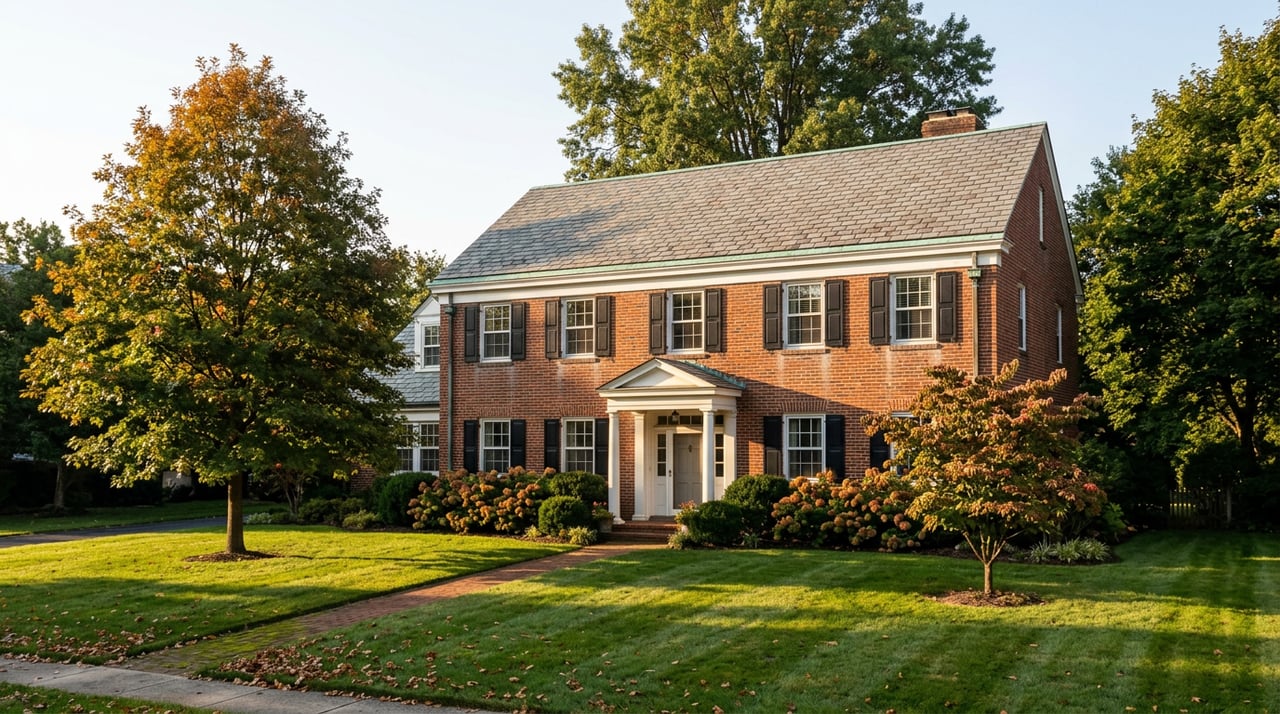
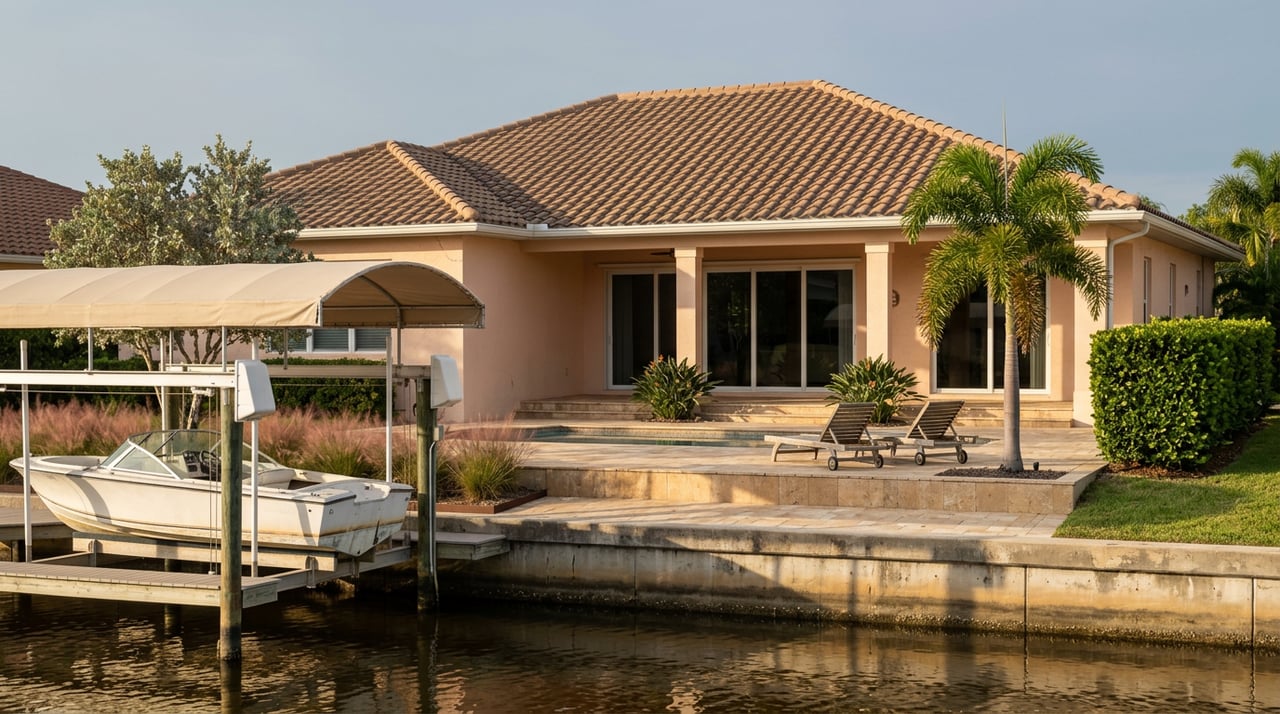
Two buyers with roughly $800,000 to spend went shopping in Arlington this August. One is chasing a detached home in the Cherrydale-Dominion Hills corridor, competing for a handful of listings that don't survive three weeks. The other is touring two-bedroom condos near the Ballston Metro, grabbing a bagel at the new Call Your Mother on the way between showings, because there's no rush. Sellers in that building have been sitting on the market long enough to talk price.
Both of them would tell you they're buying in "Arlington real estate." They are not in the same market.
The Number Hiding Inside The Median
Arlington's headline numbers this summer read like a normal, if unspectacular, market. The county's median sales price sat at $823,000 in July 2026, compared with $750,000 across Northern Virginia as a whole, while overall sales volume was down about 5% year over year to 227 closed properties. Ryan McLaughlin, CEO of the Northern Virginia Association of Realtors, described the pattern behind those numbers plainly: inventory is growing in some segments while remaining incredibly constrained in others. Buyers, he said, are finding more choices among condos and attached homes, while the supply of single-family detached homes stays very limited.
That's the split in one sentence, but it understates how far it's already gone. Earlier in the spring, Arlington's average sales price crossed $1 million for the first time on record, then kept climbing. That figure was being pulled almost entirely by the detached-home segment, where high-income buyers with real equity were competing over a shrinking pool of houses. Condo and townhome closings, meanwhile, had fallen roughly 25% year over year in the same stretch even as prices held steady, a sign that fewer transactions were happening, not that the segment was thriving.
The county's own 2026 forecast, released by NVAR and George Mason University's Center for Regional Analysis, had already flagged this coming. Single-family prices were projected to rise 3.8% for the year, the second-highest rate among six Northern Virginia jurisdictions behind only Alexandria. Condos, after falling roughly 7.4% in 2025, were projected to recover just 2.1%. Townhomes sat in between, expected to rise 1.9% after a nearly flat 2025.
None of that is a temporary dip correcting itself. It's a structural gap, and it's about to get a push from a direction most Arlington condo shoppers haven't heard about yet.
Where The Line Actually Runs
The detached-home premium concentrates in specific pockets, and the condo value sits in others. Knowing which is which matters more than the county median ever will.
| Submarket | What's happening in 2026 | What it means for your budget |
|---|---|---|
| Cherrydale, Westover, Lyon Village, Dominion Hills corridor | Fastest-moving detached-home segment in the county | Expect competition; well-priced listings move in days |
| Clarendon, Ballston | Walkable core, detached supply still scarce | Condos remain the realistic entry point here |
| Columbia Pike | Long-standing value corridor with ongoing retail and apartment investment | Lower entry price than Clarendon or Ballston, with more room to negotiate |
| Fairlington, Arlington Forest | Established fee-simple townhome communities | Steadier mid-range pricing, less exposure to condo-fee pressure |
| National Landing (Crystal City, Pentagon City, Potomac Yard) | Condo-heavy, closest to the Amazon HQ2 footprint | Best current selection for condo buyers, and the segment most exposed to the financing shift below |
Buyers with a detached-home budget in North Arlington are effectively bidding against each other for a supply that isn't expanding. Buyers looking at condos in National Landing or along Columbia Pike are working with real leverage right now. But that leverage has a shelf life, and it isn't the one most buyers assume.
The Rule That's About To Reshape Condo Fees
Here's the part that doesn't show up in a portal search. Starting with loan applications dated January 4, 2027, Fannie Mae and Freddie Mac will require condo associations to direct at least 15% of their annual assessment income into reserves, up from the 10% floor that's held for years. Buildings that fall short risk losing their "warrantable" status, the designation that lets buyers get a standard conventional mortgage there at all. Lose that status and financing gets harder, and more expensive, for every unit in the building, not just the one currently for sale.
There's an exemption. Associations with a reserve study completed in the past three years, funded at that study's highest recommended level, don't have to meet the flat 15% rule. Everyone else does.
Virginia doesn't help buildings get ahead of this. The commonwealth sets no state-mandated minimum reserve funding percentage or dollar target. Boards can lean on reserves, special assessments, or borrowed funds in whatever mix makes sense, as long as the disclosure to buyers is accurate. That's a lower bar than some states now require, which means a fair number of older Arlington buildings are entering 2027 without the funding cushion the new federal rule assumes.
The reason Fannie and Freddie tightened this in the first place isn't abstract. Champlain Towers South in Surfside had less than $800,000 in reserves against a fully funded target of $10.3 million, about 7% of what the building actually needed. Closing that gap required a $15 million special assessment that owners hadn't finished paying when the building collapsed in 2021. Most associations will never face anything close to that scale, but the underlying pattern, years of underfunded reserves compounding until one bill forces the issue, is the ordinary story behind most special assessments, not the exception.
For a condo buyer in Arlington today, that means the segment's current affordability edge is riding on an assumption that may not hold. A building with a stale or absent reserve study could see fees climb meaningfully over the next year to meet the new floor, on top of whatever a special assessment already adds. Virginia law requires sellers to disclose an approved or pending special assessment before closing, but a reserve study that simply hasn't been updated recently isn't a violation of anything. It's just a gap the buyer has to go looking for.
What This Actually Changes For Your Search
If you're shopping detached homes in North Arlington, the math hasn't changed: inventory is the constraint, and it isn't loosening. Budget for competition and move quickly on anything priced realistically in Cherrydale, Westover, or the Dominion Hills corridor.
If you're shopping condos, the current window of choice in National Landing or along Columbia Pike is real, but it's worth treating the building's paperwork as seriously as the unit itself. Ask for the most recent reserve study and its date. Ask whether the association is funding at the study's recommended level or something lower. A building that's already compliant with the coming 15% floor is a meaningfully safer purchase than one that will need to raise fees or pass a special assessment to catch up.
If you're selling a condo, this is the argument for getting your building's paperwork in order before you list, not after an offer falls through financing review.
A Few Questions Worth Asking Before You Write An Offer
Does the new reserve rule apply to a condo I already own, or only new purchases? The 15% requirement applies to loan applications dated January 4, 2027 and after. An existing owner isn't forced to refinance, but if the building doesn't meet the standard, buyers using conventional financing may have trouble qualifying to purchase your unit later, which affects resale value now.
Is a reserve study legally required in Virginia? No. Virginia sets no state minimum for reserve funding and relies on disclosure rather than a mandated study or percentage target. That makes it worth asking directly rather than assuming one exists.
Does a pending special assessment have to be disclosed? Yes. In Virginia, an approved or pending special assessment must be disclosed to a buyer before closing. A study that's simply outdated, though, isn't something the seller is required to flag on its own.
Arlington's housing market this year isn't cooling evenly. It's dividing along lines that a county-wide median will never show you, and the next twelve months are going to widen that divide in a way most buyers haven't priced in yet.
If you're weighing a detached home against a condo in Arlington, or trying to figure out whether a specific building's reserve position is a real risk or a non-issue, TSR Homes can walk through the actual paperwork with you before you write an offer. Hire us.